Why Soybeans Are One of the Best Anti-Cancer Foods You Can Eat
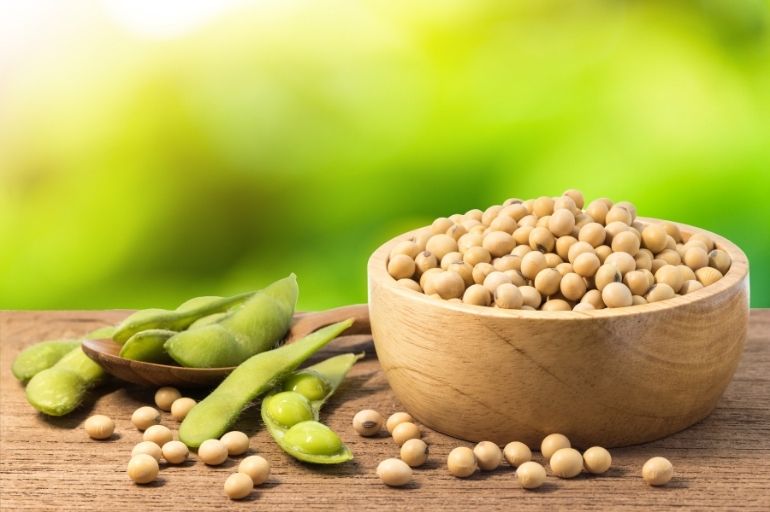
This humble bean is one of the most well-studied anti-cancer foods in the world.
Edamame, tempeh, and cooked soybeans belong on your plate as often as any other bean. Like all legumes, they deliver plant protein, fiber, and protective phytochemicals. But soybeans have something special: isoflavones, anti-estrogenic phytochemicals linked to a lower risk of breast cancer, prostate cancer, and cardiovascular disease.
For decades, soy has been unfairly maligned, but the science tells a different story: soy foods protect against cancer.
Higher soy intake, lower cancer risk
Across the world, women who eat more soy have less breast cancer. A meta-analysis pooling eight prospective studies from Asia, Australia, and North America found that women with no or low soy isoflavone intake accounted for 75% of breast cancer diagnoses, while those with the higher intake (more than 15 mg/day) accounted for just 25%. Higher soy isoflavone intake was associated with a lower risk of both pre- and postmenopausal breast cancers.1
The amount matters. Another meta-analysis found that each additional 10 mg of soy isoflavones eaten daily lowered breast cancer risk by 3%, and that moderate soy intake may not be enough, with protection from cancer requiring at least 30 mg of isoflavones a day, the equivalent of one to two daily servings of soy foods.2
Soy also helps women who already have breast cancer. A review of four prospective studies found that high soy intake, compared to low intake, was linked to a 26% lower risk of recurrence, and the dose-response analysis found a 30% reduction in recurrence risk at 60 mg of isoflavones daily.3
Importantly, soy is safe for women with breast cancer. Fourteen randomized controlled trials measuring breast density and six measuring breast cell proliferation (biomarkers of breast cancer risk), using isoflavone doses ranging higher than a typical diet (from 40 up to 340 mg a day), found no increase in either one.4
Both the American Cancer Society and World Cancer Research Fund recommend breast cancer survivors consume soy foods to help reduce the risk of recurrence.
Sources:
Soy Isoflavones and Breast Cancer Risk: A Meta-analysis
Soy intake and breast cancer risk: a prospective study of 300,000 Chinese women and a dose-response meta-analysis
Phytonutrients and outcomes following breast cancer: a systematic review and meta-analysis of observational studies
A Review of the Clinical and Epidemiologic Evidence Relevant to the Impact of Postdiagnosis Isoflavone Intake on Breast Cancer Outcomes
Isoflavones aren't estrogen, and that's the point
Soybeans contain isoflavones, natural compounds similar enough to estrogen that they can bind to the body's estrogen receptors. But the similarity ends there. The body has two types of these receptors: ER-alpha, which promotes breast cancer cell proliferation and tumor growth, and ER-beta, which inhibits tumor cell proliferation, and opposes the actions of ER-alpha. Human estrogen binds strongly to ER-alpha. Isoflavones prefer ER-beta.4-10
That single difference explains much of soy's protective effect on breast tissue. In bone, the same isoflavones help keep bone building and bone breakdown in balance, which is one reason soy is especially useful for postmenopausal women.7
The old fear that soy raises breast cancer risk came from mouse studies, in which researchers implanted human tumor cells and, in many cases, delivered excessively high levels of isoflavones by injection, not through the diet. Mice metabolize isoflavones differently than people do, and the results have not held up in human studies. Decades of human research point the other way: soy foods and isoflavones lower breast cancer risk.4
Soy does not disrupt women's or men’s reproductive hormones. A meta-analysis of 40 randomized trials found soy isoflavones had no effect on endometrial thickness, circulating estrogen, or FSH levels.11 Meta-analyses examining soy intake in men have found no effect on men's testosterone, estrogen, or sperm quality.12,13
Sources:
Role of estrogen receptors in health and disease
Estrogen Receptor Beta (ERbeta): A Ligand Activated Tumor Suppressor
Soy foods, isoflavones, and the health of postmenopausal women
Effect of Soy Isoflavones on Measures of Estrogenicity: A Systematic Review and Meta-Analysis of Randomized Controlled Trials
Neither soy nor isoflavone intake affects male reproductive hormones: An expanded and updated meta-analysis of clinical studies
Soy's cancer protection goes beyond anti-estrogen effects
Soy isoflavones do more than interact with estrogen receptors. Studies show soy isoflavones slow tumor cell proliferation, block the angiogenic signals tumors send to bring in the blood vessels they need to grow, and reduce inflammation, independent of estrogen receptors.1,14,15 That is likely why higher soy intake is linked to a lower risk of cancer overall,15 including cancers unrelated to estrogen. Higher soy intake has been associated with a lower risk of lung cancer,16 prostate cancer,17 colorectal cancers,18 and endometrial cancer,19 in addition to breast cancer.
Higher soy intake is also associated with a lower risk of death from cancer, including a 7% reduction in the risk of death from any cancer per 10 mg/day increase in isoflavone intake, and a 12% reduction in risk of breast cancer death per 5 g/day increase in soy protein intake.20
Sources:
Isoflavone and soy food intake and risk of lung cancer in never smokers: report from prospective studies in Japan and China
Soy Consumption and the Risk of Prostate Cancer: An Updated Systematic Review and Meta-Analysis
Soy and isoflavone consumption and risk of gastrointestinal cancer: a systematic review and meta-analysis
Soy Intake Is Associated With Lower Endometrial Cancer Risk: A Systematic Review and Meta-Analysis of Observational Studies
Soy, Soy Isoflavones, and Protein Intake in Relation to Mortality from All Causes, Cancers, and Cardiovascular Diseases: A Systematic Review and Dose-Response Meta-Analysis of Prospective Cohort Studies
Soy protects your heart and bones too
Soybeans support cardiovascular health through the actions of isoflavones as well as their plant sterols and fiber.21,22 Clinical trials confirm that soy protein and isoflavones lower total and LDL cholesterol in postmenopausal women. A 2023 meta-analysis found that just 27 grams of tofu a day, about one-sixteenth of a block, was linked to an 18% reduction in cardiovascular disease risk.23
Soy isoflavones support bone health too. In bone tissue, both estrogen receptors have protective functions, helping to balance bone building and breakdown while reducing oxidative stress and inflammation.10,24,25
Sources:
Regulatory Actions of Estrogen Receptor Signaling in the Cardiovascular System
Soy Consumption and the Risk of Type 2 Diabetes and Cardiovascular Diseases: A Systematic Review and Meta-Analysis
Soy Isoflavones and Osteoporotic Bone Loss: A Review with an Emphasis on Modulation of Bone Remodeling
Your gut bacteria matter too
Not everyone gets the same benefit from soy. Gut bacteria convert some isoflavones into a compound called equol, which binds even more effectively to ER-beta.26 The good news: a diverse, healthy gut microbiome is linked to more equol production.27 Eating a variety of fiber-rich foods, the foundation of a Nutritarian diet, supports the bacteria that help you get the most out of soy.
Sources:
Equol: a metabolite of gut microbiota with potential antitumor effects
Stability of equol production capability is associated with the diversity of the gut microbiota of the host: a prospective cohort study
My recommendations
Choose whole soy foods over isoflavone supplements or isolated soy protein. Edamame, tempeh, and cooked soybeans deliver isoflavones alongside protein, fiber, and other phytochemicals that a supplement can't match.
- Include edamame, tempeh, or cooked soybeans as part of your daily bean variety.
- Tofu is a fine choice too, though it's not as high in fiber as whole soybean foods.
- Use unsweetened soy milk (soybeans and water, no other ingredients) in smoothies, dressings, and sauces.
- Aim for at least one serving of soy foods a day.