Quick Fixes to Avoid the Perils of Sitting too Much
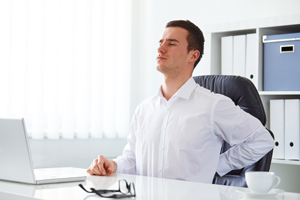
For your good health, stand up and take a short walk to avoid significant stretches of sitting. If your work involves sitting at a desk for eight hours a day, which is common today, or whether you favor being a couch potato at home such long periods of sedentary time is associated with greater risks of diabetes, cardiovascular disease and all-cause mortality, as well as colon, endometrial and lung cancers.1-2 Also, contrary to popular belief, one long period of exercise does not combat the dangers of over-extended sitting. A major finding of research on sedentary behavior is that exercising before or after work (although beneficial in itself) does not undo the damage done by sitting all day. So what is a person to do when his or her job demands working at a desk most of the day? The answer is simple: interrupt sitting time with brief exercises or walks may prevent the negative health effects of a sedentary job.
Benefits of interrupted sitting sessions
Some interesting results have emerged from studies using short bouts of walking. A relatively short period of sitting—5 consecutive hours (less than an 8 hour work day)-- increased insulin resistance compared to 5 hours of sitting interrupted every 20 minutes with a 2-minute walk.
Participants consumed a 760-calorie meal at the start, completed one of 5-hour patterns, and then the other pattern on the following day. The results showed a more than 20 percent decrease in plasma glucose and insulin levels on the day with walking interruptions.4
Another interesting study compared a single block of 30 minutes of walking to a total of 30 minutes of walking spread out over a day of sitting. In this 2013 study, published in the American Journal of Clinical Nutrition, 70 healthy normal weight adults performed each of these three different patterns in random order:
- 9 hours continuous sitting; uphill walk on a treadmill for 30 minutes
- 8.5 hours of continuous sitting
- 9-hour period of sitting, interrupted by 100 second (1 minute 40 sec) walking breaks every 30 minutes (30 minutes total walking)
The participants were given three meals each day throughout the experiment. Regular walking breaks reduced plasma glucose by 37 percent and plasma insulin by 18 percent.
The most notable result from this study was that the regular walking breaks produced greater reductions in plasma glucose and insulin than the 30 minute block of physical activity.5 The important message from studies like these is that even very light activity can help to counteract the dangers of sitting, as long you interrupt your sitting time frequently.
Best strategies to avoid danger of sitting too long at work
- Standing and sit-to-stand (height-adjustable) workstations are being used as tools for reducing prolonged sitting time at work. For optimal health you not only have to get exercise, you also have to avoid prolonged, uninterrupted sitting time. If it is available at your work place, try standing for a significant portion of the day with a sit-to-stand desk. Although standing may appear somewhat inactive, it is much different than sitting when it comes to muscle activity of the lower body. When we are sitting our muscles are idle, but once we stand up, there is measurable electrical activity in the large muscles of our legs—we use these muscles when we are standing.6 Standing for at least a portion of the day increases total calorie expenditure. 7 When we stand, we naturally shift weight and move around. Additional movement, even light movement, will increase metabolic activity, potentially enhancing the benefit.8 Standing while working—and alternating standing and sitting—have been found to reduce plasma glucose levels compared to sitting while working.9-10 Take occasional walking breaks, even if you do work at a standing or sit-stand.
- If active workstations aren’t available, set timer to remind you to take 1-2 minute walk breaks every 30 minutes.
- Take every opportunity throughout the day to stand up and move. Take phone calls standing up. Walk up and down the stairs a few times a day. Walk to a colleague’s office instead of sending an email. . Remember, even light activity makes a big difference.