| |
Nutrient Densityby Joel Fuhrman M.D.
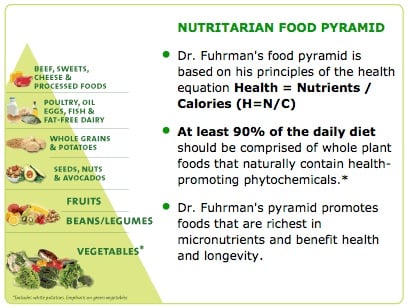
Nutrient Density is a critical concept in devising and recommending dietary and nutritional advice to patients and to the public. Not merely vitamins and minerals, but adequate consumption of phytochemicals are essential for a normal immune system and to enable our body’s detoxification and cellular repair mechanisms that protect us from cancer and other diseases.
Nutritional science in the last twenty years has demonstrated that colorful plant foods contain a huge assortment of protective compounds, mostly unnamed at this point. Only by eating an assortment of natural foods that are nutrient-rich, can we access these compounds and protect ourselves from the common diseases that afflict Americans. Our modern, low-nutrient eating style leads to an overweight population with common diseases of nutritional ignorance and medical costs spiraling out of control.
My rankings of foods below can supplement the high nutrient hierarchy explained in my book, Eat To Live. I encourage people to read Eat To Live to further understand the science, logic and application and also to understand the benefits that will be gleaned from eating higher on the nutrient density line.
Because phytochemicals are largely unnamed and unmeasured, these rankings underestimate the healthful properties of colorful natural plant foods compared to processed foods and animal products. One thing we do know is that the foods that contain the highest amount of known nutrients are the same foods that contain the most unknown nutrients too. So even though these rankings may not consider the phytochemical number sufficiently they are still a reasonable measurement of their content.
|
A Sample of Dr. Fuhrman's
Nutrient Density Scores
|
| |
Kale |
1000 |
|
Kidney Beans |
100 |
|
Grapes |
31 |
|
| |
Collards |
1000 |
|
Tofu |
86 |
|
White Potato |
31 |
|
| |
Bok Choy |
824 |
|
Sweet Potato |
83 |
|
Banana |
30 |
|
| |
Spinach |
739 |
|
Sunflower Seeds |
78 |
|
Chicken Breast |
27 |
|
| |
Arugula |
559 |
|
Apple |
76 |
|
Eggs |
27 |
|
| |
Cabbage |
481 |
|
Peach |
73 |
|
Peanut Butter |
26 |
|
| |
Romaine Lettuce |
389 |
|
Green Peas |
70 |
|
Whole Wheat Bread |
25 |
|
| |
Broccoli |
376 |
|
Cherries |
68 |
|
Feta Cheese |
21 |
|
| |
Cauliflower |
295 |
|
Flax Seeds |
65 |
|
Whole Milk |
20 |
|
| |
Green Peppers |
258 |
|
Pineapple |
64 |
|
Ground Beef |
20 |
|
| |
Artichoke |
244 |
|
Oatmeal |
53 |
|
White Pasta |
18 |
|
| |
Carrots |
240 |
|
Mango |
51 |
|
White Bread |
18 |
|
| |
Asparagus |
234 |
|
Cucumber |
50 |
|
Apple Juice |
16 |
|
| |
Strawberries |
212 |
|
Corn |
44 |
|
Swiss Cheese |
15 |
|
| |
Pomegranate Juice |
193 |
|
Soybeans |
48 |
|
Low Fat Yogurt |
14 |
|
| |
Tomato |
164 |
|
Salmon |
39 |
|
Potato Chips |
11 |
|
| |
Blueberries |
130 |
|
Almonds |
38 |
|
American Cheese |
10 |
|
| |
Iceberg Lettuce |
110 |
|
Shrimp |
38 |
|
Vanilla Ice Cream |
9 |
|
| |
Orange |
109 |
|
Avocado |
37 |
|
French Fries |
7 |
|
| |
Lentils |
104 |
|
Skim Milk |
36 |
|
Olive Oil |
2 |
|
| |
Cantaloupe |
100 |
|
Walnuts |
29 |
|
Cola |
1 |
|
| |
|
|
|
|
Joel Fuhrman, M.D. Proprietary
|
|
| |
Coming Soon to Dr. Fuhrman's Online Members Center! - A more comprehensive overview of Dr. Fuhrman's Nutrient Density Scoring System, including an expanded list of foods and their density scores. |
|
|
|
|
Keep in mind that nutrient density scoring is not the only factor that determines good health. For example, if we only ate foods with a high nutrient density score our diet would be too low in fat. So we have to pick some foods with lower nutrient density scores (but preferably the ones with the healthier fats) to include in our high nutrient diet. Additionally, if a thin person or highly physically active individual ate only the highest nutrient foods they would become so full from all of the fiber and nutrients that would keep them from meeting their caloric needs and they would eventually become too thin. This of course gives you a hint at the secret to permanent weight control. For further details read, Eat To Live. But, shhh don't tell anybody about this.
|
Dr. Fuhrman's Nutrient Density Scoring System1
To determine the scores above all known vitamins and minerals were considered and added in. Nutrient Data from Nutritionist Pro software for each food item was obtained for the amount of that food that would provide a 1000 calorie serving. We included the following nutrients in the evaluation: Calcium, Carotenoids: Beta Carotene, Alpha Carotene, Lutein & Zeaxanthin, Lycopene, Fiber, Folate, Glucosinolates, Iron, Magnesium, Niacin, Selenium, Vitamin B1 (Thiamin) Vitamin B2 (Riboflavin), Vitamin B6, Vitamin B12, Vitamin C, Vitamin E, Zinc, plus ORAC score X 2 (Oxygen Radical Absorbance Capacity is a method of measuring the antioxidant or radical scavenging capacity of foods).
Nutrient quantities, which are normally in many different measurements (mg, mcg, IU) were converted to a percentage of their RDI so that a common value could be considered for each nutrient. Since there is currently no RDI for Carotenoids, Glucosinolates, or ORAC score, goals were established based on available research and current understanding of the benefits of these factors. (limited references below). The % RDI or Goal for each nutrient which the USDA publishes a value for was added together to give a total. All nutrients were weighted equally with a factor of one except for the foods ORAC score. The ORAC score was given a factor 2 (as if it were two nutrients) due to the importance of antioxidant nutrients so that measurement of unnamed anti-oxidant phytochemicals were represented in the scoring. The sum of the food’s total nutrient value was then multiplied by a fraction to make the highest number equal 1000 so that all foods could be considered on a numerical scale of 1 to 1000. |
|
1 Dr. Fuhrman's nutrient density food rankings, scoring system, and point determinations of foods is patent pending.
|
|
References:
Nutritionist Pro [Nutrition Analysis Software] Versions 2.5, 3.1. Stafford TX . Axxya Systems. 2005,2006.
Higdon, Jane. Isothiocyanates. The Linus Pauling Institute. Micronutrient Research Center. 9/20/2005. http://oregonstate.edu/infocenter/phytochemicals/isothio.
Wu, Xianli; Beecher, Gary; Holden, Joanne; Haytowitz, David; Gebhardt, Susan; Prior Ronald. 2004; Lipophilic and Hydrophilic Antioxidant Capacities of Common Foods in the United States. Journal of Agricultural and Food Chemistry. 52. 4026-4037.
Dietary Reference Intakes for Vitamin C, Vitamin E, Selenium, and Caroteinoids, 2000. Food and Nutrition Board. Institute of Medicine. National Academy Press. Washington D.C. pp. 343-344.
Dietary Reference Intakes for Energy, Carbohydrate, Fiber, Fat, Fatty Acids, Cholesterol, Protein, and Amino Acids. 2002. Food and Nutrition Board. Institute of Medicine. National Academy Press. Washington D.C. p. 423.
Mc Bride, Judy. 1999. Can Foods Forestall Aging? Agricultural Research. 47(2): 15-17.
Wu, Xianli; Beecher, Gary; Holden, Joanne; Haytowitz, David; Gebhardt, Susan; Prior, Ronald. 2004. Lipophilic and Hydrophilic Antioxidant Capacities of Common Foods in the United States.
Journal of Agricultural and Food Chemistry. 52. 4026-4037.
Prior, Ronald. Hoang, Ha. Gu, Liwei. Bacchiocca, Mara. Howard, Luke. Hanpsch-Woodill, Maureen. Huang, Dejuan.Ou, Boxin, Jacob, Robert. 2003. Assays for Hydrophilic and Lipophilic Antioxidant Capacity of Plasma and Other Biological and Food Samples.
Journal of Agricultural and Food Chemistry. 51. 3273-3279.
Dietary Reference Intakes for Vitamin C, Vitamin E, Selenium and Caroteinoids. 2000. Food and Nutrition Board. Institiute of Medicine. National Academy Press. Washington D.C. pp. 343-344. Prior, RL. 1999. Can Foods Forestall Aging?
Agricultural Research. 47(2): 15-17.
|
|
|