Knowing a food’s nutrient density is key to making good choices
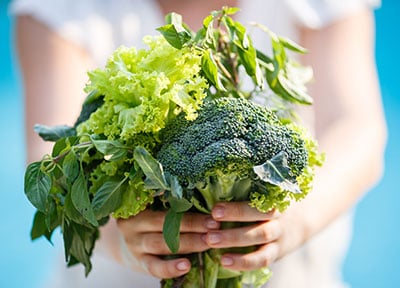
Discover how the ANDI and Nutrient IQ Scores can help you make healthy choices.
Summary
You literally are what you eat – the nutrient density in your body’s tissues is proportional to the nutrient density of your diet. This is bad news for many Amercians, because the Standard American Diet (SAD) gets more than 85 percent of its calories from health-damaging animal products and processed foods. What makes it more alarming is the fact that so many people believe they are eating a healthful diet. This is why Dr. Fuhrman developed the ANDI and Nutrient IQ scores to rate the nutrient density of foods.
Read
5 Ways to amp up your nutrient intake
G-BOMBS: The healthiest anti-cancer foods
Related Product
Dr. Fuhrman’s Nutritarian Handbook & ANDI Food Scoring Guide
This concise instructional guide to the Nutritarian diet provides a comprehensive list of ANDI scores, side-by-side nutritional analysis of SAD and Nutritarian meals, plus recipes and menu plans
I can summarize my dietary recommendations in one sentence: Whole plant foods are the best ones for our health and longevity. But this simple truth often gets drowned out in our diet-obsessed culture, where buzzwords like low-carb, low-calorie, low-fat, and paleo (just to name a few) are employed to put a positive spin on health-damaging processed foods, animal products, oils and artificially sweetened drinks and more.
To help my patients, and later the entire world make the best possible food choices, I created the Aggregate Nutrient Density Index (ANDI) scoring system, and the Nutrient IQ ranking. The ANDI score shows the relative nutrient density of key foods, based on the amount of nutrients they deliver per calorie consumed. Nutrient IQ assigns each food a number of points that is based on the amount of nutrients it contains in a standard portion size. The total Nutrient IQ points at the end of the day are a convenient way to gauge the amount of nutrients consumed and the healthfulness of your diet.
Lifestyle-related diseases
Food myths are widespread, and contribute to the epdemic of obesity and poor healththat affects so many people today. Lifestyle-related diseases are the most common causes of death, but according to a 2016 poll, 75 percent of Americans believe their eating habits are either good, very good, or excellent.1 In reality, almost 90 percent of Americans don’t meet the daily consumption of 1.5 to 2 cups of fruit, and 2 to 3 cups of vegetables, which is recommended by the CDC.2
The Standard American Diet (SAD) is made up mostly of disease-causing foods, with 30 percent of calories from animal products and over 55 percent from processed foods.3,4 In addition, 63 percent of Americans polled reported that they drank at least one sugar-sweetened drink each day.5 Although about 70 percent of Americans are overweight or obese,6 only 41 percent of those in a recent Gallup poll considered themselves overweight or obese.7
This highlights the nutritional misinformation that abounds in our society. Americans have not yet grasped the concept of nutrient density and its importance for health and longevity.
The health equation
The nutrient density in your body’s tissues is proportional to the nutrient density of your diet. Micronutrients fuel proper functioning of the immune system, and enable the detoxification and cellular repair mechanisms that protect us from chronic diseases. I coined the term “Nutritarian” to define a diet that provides a high ratio of micronutrients per calorie, and a high level of micronutrient variety.
Here is a simple equation to help you understand how your health is related to the nutrient density of your diet:
H= N/C
(Health = Nutrients / Calories)
Adequate consumption of micronutrients – vitamins, minerals, and many other phytochemicals – without excessive caloric intake, is the key to achieving excellent health.
Aggregate Nutrient Density Index (ANDI)
To illustrate which foods have the highest nutrient-per-calorie density, I created the Aggregate Nutrient Density Index (ANDI). It lets you quickly see which foods are the most health-promoting and nutrient-dense.
The ANDI ranks the nutrient value of many common foods on the basis of how many nutrients they deliver to your body for each calorie consumed. Unlike food labels, which list only a few nutrients, ANDI scores are based on 34 important nutritional parameters. Foods are ranked on a scale of 1 to 1000, with the most nutrient-dense cruciferous leafy green vegetables at the top of the list with a score of 1000.
It is also important to achieve micronutrient diversity, not just a high level of a few isolated micronutrients. Eating a variety of plant foods is essential to good health. It is important to include a wide assortment of plant foods in your diet to obtain the full range of nutritional requirements. Include onions, seeds, mushrooms, berries, beans and tomatoes as well as greens in your diet. They all contribute to the numerator (top number in the ratio) in the H=N/C equation.
Take a few minutes to evaluate the quality of your current diet, and learn which foods you need to consume to improve it. A more comprehensive list of ANDI scores can be found in my Nutritarian Handbook and ANDI Food Scoring Guide.
ANDI Scores
Sample Nutrient/Calorie Density Scores
|
Kale |
1000 |
|
Collard Greens |
1000 |
|
Mustard Greens |
1000 |
|
Watercress |
1000 |
|
Swiss Chard |
895 |
|
Bok Choy |
865 |
|
Spinach |
707 |
|
Arugula |
604 |
|
Romaine |
510 |
|
Brussels Sprouts |
490 |
|
Carrots |
458 |
|
Cabbage |
434 |
|
Broccoli |
340 |
|
Cauliflower |
315 |
|
Bell Peppers |
265 |
|
Asparagus |
205 |
|
Mushrooms |
238 |
|
Tomato |
186 |
|
Strawberries |
182 |
|
Sweet Potato |
181 |
|
Zucchini |
164 |
|
Artichoke |
145 |
|
Blueberries |
132 |
|
Iceberg Lettuce |
127 |
|
Grapes |
119 |
|
Pomegranates |
119 |
|
Cantaloupe |
118 |
|
Onions |
109 |
|
Flax Seeds |
103 |
|
Orange |
98 |
|
Edamame |
98 |
|
Cucumber |
87 |
|
Tofu |
82 |
|
Sesame Seeds |
74 |
|
Lentils |
72 |
|
Peaches |
65 |
|
Sunflower Seeds |
64 |
|
Kidney Beans |
64 |
|
Green Peas |
63 |
|
Cherries |
55 |
|
Pineapple |
54 |
|
Apple |
53 |
|
Mango |
53 |
|
Peanut Butter |
51 |
|
Corn |
45 |
|
Pistachio Nuts |
37 |
|
Oatmeal |
36 |
|
Shrimp |
36 |
|
Salmon |
34 |
|
Eggs |
31 |
|
Milk, 1% |
31 |
|
Walnuts |
30 |
|
Bananas |
30 |
|
Whole Wheat Bread |
30 |
|
Almonds |
28 |
|
Avocado |
28 |
|
Brown Rice |
28 |
|
White Potato |
28 |
|
Low Fat Plain Yogurt |
28 |
|
Cashews |
27 |
|
Chicken Breast |
24 |
|
Ground Beef, 85% lean |
21 |
|
Feta Cheese |
20 |
|
French Fries |
12 |
|
White Pasta |
11 |
|
Cheddar Cheese |
11 |
|
Apple Juice |
11 |
|
Olive Oil |
10 |
|
White Bread |
9 |
|
Vanilla Ice Cream |
9 |
|
Corn Chips |
7 |
|
Cola |
1 |
ANDI Nutrient Scoring Method
To determine the ANDI scores, an equal-calorie serving of each food was evaluated. The following nutrients were included in the evaluation: fiber, calcium, iron, magnesium, phosphorus, potassium, zinc, copper, manganese, selenium, vitamin A, beta carotene, alpha carotene, lycopene, lutein and zeaxanthin, vitamin E, vitamin C, thiamin, riboflavin, niacin, pantothenic acid, vitamin B6, folate, vitamin B12, choline, vitamin K, phytosterols, glucosinolates, angiogenesis inhibitors, organosulfides, aromatase inhibitors, resistant starch, resveratrol plus ORAC score. ORAC (Oxygen Radical Absorbance Capacity) is a measure of the antioxidant or radical scavenging capacity of a food. For consistency, nutrient quantities were converted from their typical measurement conventions (mg, mcg, IU) to a percentage of their Dietary Reference Intake (DRI).
For nutrients that have no DRI, goals were established based on available research and current understanding of the benefits of these factors. To make it easier to compare foods, the raw point totals were converted (multiplied by the same number) so that the highest ranking foods (leafy green vegetables) received a score of 1000, and the other foods received lower scores accordingly.
Nutrient IQ
Nutrient IQ is a new scoring system based on portion sizes rather than calories. It allows you to rate your diet by adding up points for the day. Similar to ANDI, foods are assigned points based on their nutritional value. In ANDI, the scores are based on an equal calorie serving of each food, but in Nutrient IQ, the points are based on the size of the serving you eat. By adding up your scores, you get a dietary score each day.
Target Nutrient IQ Scores
|
|
Men |
Women |
|
Good |
700 |
600 |
|
Great |
1000 |
800 |
Improve your daily score by choosing more nutrient-dense food choices, rather than by eating more food. Increase your daily servings of green leafy and cruciferous vegetables and cruciferous vegetables, and include a variety of other whole plant foods: beans, fruit, berries and seeds. Pay attention to both nutrient density and micronutrient diversity.
The serving sizes listed are convenient measurements; you can adjust your scores based on the amount of the food you eat. Leafy green cruciferous vegetables rank highest, and most processed foods provide zero points.
A motivational tool
Keep in mind it is not necessary to score foods and keep track of points to follow a Nutritarian diet. I created these scoring systems so that they can serve as motivational tools, as you learn how to eat more healthfully and improve the quality of your diet.
Sample Nutrient IQ Scores
|
|
Nutrient IQ (serving size) |
|
Kale, cooked |
112 (1 cup) |
|
Bok choy |
90 (1 cup) |
|
Broccoli |
90 (1 cup) |
|
Romaine |
64 (2 cups) |
|
Tomato |
60 (1 medium) |
|
Mushrooms |
60 (1/4 cup) |
|
Onions, raw |
60 (1/4 cup) |
|
Black beans |
52 (1/2 cup) |
|
Carrots |
45 (1 cup) |
|
Corn |
45 (1 cup) |
|
Strawberries |
45 (1/2 cup) |
|
Flax seeds |
41 (1 tablespoon) |
|
Quinoa |
26 (1 cup cooked) |
|
White potato |
12 (1 medium) |
|
Salmon |
7 (4 ounces) |
|
Checken breast |
4 (4 ounces) |
|
White pasta |
0 |
|
Olive oil |
0 |