Telomeres Are Central to the Aging Process
What Are Telomeres?
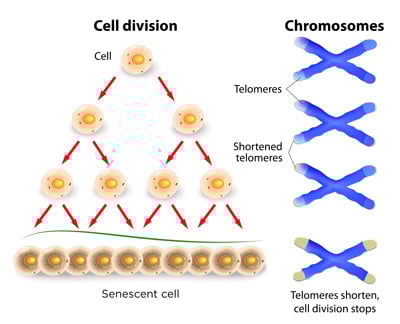
Telomeres are the caps of non-coding DNA at the ends of our chromosomes that protect our genetic material and make it possible for our cells to divide. Telomeres are where the DNA replication machinery attaches during the cell division process, so that the entire DNA strand can be copied. Each time the cell divides, the telomeres get shorter. For the next cell division to happen, there must be enough room left on the telomere for the replication enzymes. If the telomere becomes too short, the DNA can’t be copied properly, and the cell cannot divide. To prevent excessive shortening, the enzyme telomerase rebuilds telomeres. Telomere length and telomerase activity are factors associated with aging, not only within individual cells, but of organisms as a whole. As scientists continue to examine the complex role of telomeres in the aging process and the role they play in our health, we have come to understand that shorter telomere length is associated with biological aging and lifestyle-related diseases such as heart disease, diabetes, osteoporosis, and cancer, and premature death.
What Influences Telomere Length?
The good news is that telomere length, although largely genetic, can also be influenced by environmental factors, including diet and lifestyle choices. A superior diet and a healthy lifestyle are associated with greater telomere length. Conversely, since oxidative stress and chronic inflammation are linked to telomere shortening, studies have reported factors that promote inflammation and oxidative stress may also accelerate telomere erosion, namely a high body mass index, obesity, a sedentary lifestyle, smoking, chronic stress, and a low socioeconomic status.
What does this mean for you and me? It means that the positive choices we make when it comes to what we eat or how much we exercise—among other lifestyle factors – can maintain our telomeres, one of the many mechanisms by which healthy behaviors promote longevity. Higher levels of vegetable and fruit consumption, fiber intake, vitamin and mineral intake, and exercise are the factors associated with longer telomeres and/or greater telomerase enzyme activity.1-5
What Happens When Telomeres Shorten?
When the telomeres get too short, the cell can no longer divide, becoming what scientists call senescent. Senescent cells are still alive, but not able to carry out normal cellular processes, and as more cells in a tissue become senescent, it impairs the tissue’s ability to repair damage. Plus, senescent cells secrete factors that negatively affect the function of neighboring cells, including promoting the development of cancer.6
Measuring Telomere Length
Telomere length and telomerase enzyme activity can be measured in human white blood cells. A shorter length or lower telomerase activity has been associated with not only the shortening of the human lifespan, but also a number of chronic, preventable diseases, including hypertension, cardiovascular disease, insulin resistance, type 2 diabetes, depression, osteoporosis, and obesity.1,2,7,8
The Care and Feeding of Our Telomeres
In a study assessing the relationship of food groups to telomere length, vegetables were found to have the most significant association to greater telomere length. In particular, peppers, carrots, spinach, tomatoes, and root vegetables had the highest correlation. Further analysis showed specific micronutrients from whole foods were associated with telomere length: vitamins A, C, E, beta-carotene, and folate. Another study, in women, also found that higher dietary consumption of the same micronutrients, with the addition of magnesium, was again associated with longer telomere length. Also, in a study involving an elderly population, vegetable and fruit consumption were both significantly associated with longer length telomeres. An additional study in women found dietary fiber consumption to be associated with longer telomeres, further supporting the idea that whole plant foods can improve telomere length.
In addition to a healthful diet, supplementing with a well-designed multivitamin can help to optimize the body’s supply of micronutrients, which may benefit telomere length by tempering oxidative stress and chronic inflammation.2,3 The problem is that supplementing with some nutrients that are sub-optimal in one’s diet is beneficial, but other supplemental ingredients may have negative effects, such as folic acid. The reason I designed my own was to make it easy to supplement with added Vitamin D, B12, zinc and iodine, without ingesting folic acid, Vitamin A and beta carotene; ingredients that could be harmful.9-12
Creating a Telomere Maintenance Strategy
A comprehensive lifestyle change study assessed the impact on telomeres and found improvements in diet, exercise, stress management, and social support significantly increased telomere length by approximately 10 percent. Notably, the more individuals changed their behaviors, the more dramatic their improvements became.
The aging process is complex, and much has yet to be determined, but these findings indicate that lifestyle factors can influence telomere length and cellular aging. A lifestyle that embraces the Nutritarian approach to living supports healthy aging, and may even help decelerate the aging process.