The Attack Against Nuts and Seeds—Getting Nuttier All The Time.
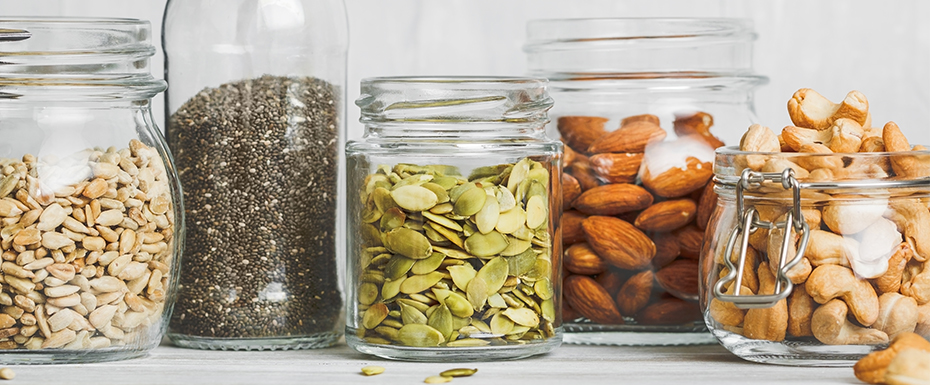
It is important to stand up to individuals who can hurt others with dangerous nutritional advice. We usually see such arguments coming from the meat-promoting nutritional gurus, attempting to find some flaw in a study that demonstrates the dangers of too much animal products in the diet. The number of studies corroborating that more animal products in the diet contribute to the development of chronic disease and premature death is deafening and indisputable at this time.
However, a similar development is occurring in the denial of the harm that results from omitting nuts and seeds from the diet – and the attempt to bolster support for an extremely low-fat vegan diet, which is clearly dangerous. It has been brought to my attention that a series of videos has been posted and promoted on YouTube attempting to discredit the studies documenting the lifespan-extending properties of including nuts and seeds in one’s diet. The individuals represented here want to try to protect their legacy of promoting an extremely low-fat vegan diets (nut and seed exclusion); unfortunately, according to a preponderance of evidence, this outmoded and disproven stance does lead to premature death. Unable to shut down the avalanche of evidence, they attempt to discredit the studies. The facts are: extreme low-fat vegan dieters are at higher risk of depression and dementia, as well as premature mortality, from all causes, and the evidence increases every year.
We give more credence to studies that involve thousands of participants and go on for decades, while looking at hard endpoints, like heart attacks and cardiovascular death. ALL such large studies show the same thing: Nut eating extends lifespan. Or, to put it another way: The lack of sufficient nuts or seeds in the diet increases premature death, particularly cardiovascular death as demonstrated in every long-term study examining this issue, such as:
- The Adventist Health Study I and II1
- The Iowa Women’s Health Study2
- The Nurses’ Health Study3
- The Physicians Health Study4
I reviewed the videos (as requested by many) and the main argument to discredit all the epidemiology on this issue was the claim that these studies have been funded by the nut industry, are biased, and therefore should be ignored.
But let’s be clear: Industry funding does not invalidate studies. True, industry is more likely to help fund research if they think will turn out in their favor. However, these studies must make it through peer review and meet the standards of scientific journals. The original study from 1992 that found the first evidence of a strong protective effect of nuts against heart disease was not funded by the nut industry. Once there was some observational evidence in favor of nuts, of course the nut industry wanted to help (partially) support additional research that would likely yield similar results.
Plus, the studies not at all supported by the nut industry show the same thing. For example, this study, funded by the National Cancer Institute included three large cohorts totaling about 200,000 participants followed for 5-12 years, and concluded that nut intake was associated with a lower risk of total mortality in all three cohorts.5
When a research institution gets a grant from the nut industry to aid their research, they cannot fabricate the findings that nut-avoiding, fat-phobic vegans were dying younger. And the results of the enormous Adventist Health Study II were consistent with prior studies and serious — a 39 percent decreased occurrence of cardiovascular mortality in those eating nuts and seeds at least 5 times a week compared to less than once a week.6 These studies involve hundreds of researchers, and to claim that they are all in collusion faking results is not merely biased, but ridiculous, especially when other studies show similar results.
By the way, the increased heart attacks and increased mortality confirmed in the Adventist Study has been corroborated in a meta-analysis of 17 carefully vetted studies and every large-scale epidemiological trial, which essentially shows the same thing – avoidance of nuts/seeds increases risk of premature death.7 Plus, multiple other meta-analyses also performed dose-response analysis and reported dose-response associations between nut intake and a lower risk of all-cause mortality – meaning, the more nuts someone ate, the less likely they were to die during the follow-up periods of the studies.8
The next claim made was that all these epidemiology studies are wrong because those eating more nuts were healthier overall for other reasons, such as they ate more vegetables, ate less meat, were less likely to be overweight, and exercised more. This was evaluated in the study, and the researchers used modern statistical methods to control and evaluate for confounding factors. This is essentially saying that the highly trained researchers are incompetent – yet this individual with no training, research credentials or clinical experience caring for the medical issues that develop in long-term nut/seed-avoiding vegans, has better answers and explanations for the astonishing findings.
Then it was falsely claimed the reduction in cholesterol is small and is just due to displacing meat and dairy. The Adventist Health Study refutes that, showing cumulative effects from the combination of several health behaviors. In vegetarian participants who exercised regularly, expected age at death was 7.8 years older in the group who ate nuts regularly vs. those who did not.9
Despite cholesterol-lowering effects described as small, pooled results of four large, early prospective studies (The Adventist Health Study, The Iowa Women's Health Study, The Nurses' Health Study, and the Physicians' Health Study) reported a 37 percent reduction in heart disease risk in participants eating nuts more than four times per week compared to those who never or rarely ate nuts. In this analysis, each weekly serving of nuts was associated with an 8.3 percent reduction in risk.10 This reduced risk of coronary heart disease seen in epidemiologic studies is supported by studies investigating potential cardio-protective mechanisms of nuts and seeds. In addition to cholesterol reduction, these studies suggest nuts and seeds reduce oxidative stress and inflammation, promote insulin sensitivity, and improve endothelial function; plus, there is strong evidence from human trials that seeds, flaxseed in particular, reduces systolic and diastolic blood pressure.11
They also attempted to debunk the original 1992 conclusions from the Adventist Health Study that reported a reduction in risk of CHD associated with nut consumption by twisting the findings. He says, “if you believe the results of this study, you should eat cheese too, because that was also associated with a lower risk” – he says the same for beef and bread. But if you look at the 95 percent confidence intervals in the table (shown in the video) you’d see these associations were not statistically significant. He says the opposite for legumes and fruit, that you should avoid them because they increased risk, but these were also nonsignificant results. The association with nuts, in contrast, was significant. The results on nuts were the ones the researchers highlighted because they were the only statistically significant finding.12 The Cochrane analysis was also misrepresented, which did not include long-term studies reporting on death or cardiovascular events.13
Remember, Dr. Esselstyn’s and Dr. Ornish’s studies, demonstrating improvement in cardiovascular disease, do not prove that avoiding nuts is safe or that people with heart disease should avoid nuts and seeds. First of all, Dr. Ornish’s group used high-dose fish oil with a near-vegan diet. So, he cannot be included here, as he was not advocating severe fat avoidance since his patients were using lots of fish oils – and he also now includes some nuts and seeds in his heart disease program (as a result of all this increasing evidence on their importance). They claimed there are no studies on vegan with heart disease using nuts, conveniently avoiding my paper published In the American Journal of Lifestyle Medicine documenting impressive cardiovascular reversal results (while including nuts and seeds) and reporting more dramatic sustained weight loss.14 The outcomes with my hundreds of advanced heart patients using nuts and seeds over the last 30 years has been remarkable.
To assume the safety of radically excluding fats with heart patients would require a larger population and a longer follow-up period – like the epidemiology studies mentioned above that all showed excluding nuts and seeds to be dangerous. Erring on the side of caution, radically excluding fat (and DHA supplementation) from the diet of sick people, with no evidence and experience documenting safety, and so much evidence demonstrating danger, should not be the default position when large randomized controlled trials are lacking.
The other issue is that I have 30 years of clinical experience caring for this community of damaged vegans, who can and do develop anxiety, severe depression, post-partum depression and dementia as a result of such irresponsible advice to ignore the need for fatty acid adequacy (including DHA) promoted by this community. And, anyone like me that stands up to this wrong and harmful information gets attacked and slandered by these anti-nut nuts.
As a busy primary care physician caring for this community of vegans and health seekers, I have cared for hundreds that have gotten in trouble with such improper dietary advice that did not suit their individual physiology. Additionally, I have seen lots of otherwise healthy elderly vegan patients with memory loss and dementia from long-standing DHA deficiencies.
I don’t think there are many physicians who have had such a busy medical practice for three decades, caring for this community, many who needed to seek me out after being hurt by following the extremely low-fat advice. It is a matter of ethical consciousness and importance to call this out and state that I consider these videos – that promote these discredited dietary positions – irresponsible, as people are encouraged to place their lives at higher risk and ignore these important scientific and clinical findings.
By the way, there are many mechanisms via which nuts and seeds are lifespan-promoting including the enhancement of not merely 700 different carotenoids, but the absorption of an entire class of lifespan-lengthening (fat-soluble) phytonutrients, whose absorption is enhanced with increased fat in the meal, including phytosterols, terpenes, diterpenes, saponins, as well as numerous vitamin E fragments (tocopherols and tocotrienols).15 There is large genetic variation in absorption and bioavailability from person to person, as well as a variety of testing methods used in such studies, so the precise effects on each person may vary.
The bottom line is, these videos do not contain responsible nutritional information, though we can expect such attacks to continue because the legacy of wrong information and ego are powerful forces that cause intellectual blindness.