Avoiding “bad” foods is not enough
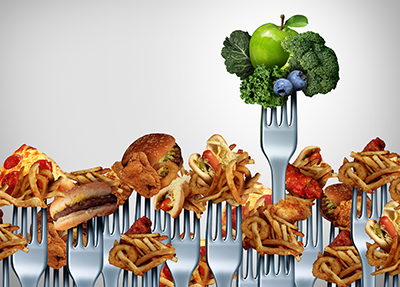
To protect against heart attack and stroke, is it enough to avoid sweets, white flour, and fried foods? Or do we need to place more focus on eating more vegetables, fruits, beans, nuts and seeds? A large international study of nearly 16,000 people with coronary heart disease from 39 different countries suggests the latter.
The study scored participants on how closely their reported diets aligned with either “Mediterranean” or “Western” diet patterns. For the Mediterranean score, participants received 0-4 points based on their daily servings of whole grains, vegetables, legumes, and fruits; weekly consumption of fish and moderate alcohol consumption added points too. The Western diet score increased with more frequent consumption of refined grains, sweets and desserts, sugary drinks, and deep fried foods.
After a follow-up period of 3.7 years, major cardiovascular events (non-fatal heart attack, non-fatal stroke, or death from a cardiovascular cause) were assessed. About 18 percent of participants had a Mediterranean diet score of 15 or higher, and this group had the lowest risk of major cardiovascular events. Also, starting at a Mediterranean diet score of 12, there were dose-dependent risk reductions: for each 1 point increase in Mediterranean diet score, the risk of all major cardiovascular events was 5 percent lower, for heart attack 4 percent lower, and for stroke 9 percent lower.
There was no association between the Western diet score and cardiovascular events, which means that eating more or less unhealthy food did not make much difference either way.1 What made the real difference was when people ate more vegetables, beans, nuts and seeds. The consumption of these beneficial foods had a more powerful effect than just avoiding unhealthy food. The authors propose that dietary guidelines for prevention should focus on greater consumption of health-promoting foods. Switching from white bread to whole wheat bread, giving up sugary drinks, and avoiding fried foods is a good start, but it’s not enough. It’s a modest change that will bring only modest results. When you increase high-nutrient, cardioprotective foods, you’ll decrease the low-nutrient foods automatically, and over time lose your desire for them. You may also save your life.
“Western” foods harm the cardiovascular system
The foods that contributed to the Western diet score have known hazardous effects on the cardiovascular system. Refined grains, sweets, desserts, and sugary drinks are high-glycemic foods; a high-glycemic diet causes dangerously high glucose and insulin levels, dramatically increasing the risk of obesity, type 2 diabetes, and cardiovascular disease.2-5 These foods also lead to exposure to advanced glycation end products, which can cause damage to the vascular system.6 Foods fried in oil elevate circulating fats after a meal, drive inflammation, and impair endothelial function, promoting the development of atherosclerosis.7-10
High-nutrient plant foods benefit the cardiovascular system
The whole plant foods contributing to the Mediterranean diet score have been linked to lower cardiovascular risk in this and other large international studies. The INTERHEART study, for example, identified low vegetable and fruit intake as one of 9 mostly modifiable risk factors responsible for 90 percent of heart attacks across 52 countries.11 In the Global Burden of Disease Study, dietary risk factors (including low intake of vegetables, fruits, and nuts/seeds) were attributable for 11.3 million deaths worldwide in 2013.12 So remember, a Mediterranean diet is a step in the right direction, but it is not the same as a Nutritarian diet. A Mediterranean diet may reduce risk of heart disease somewhat, but it still permits plenty of needless heart attacks, while a Nutritarian diet is designed to completely wipe out cardiovascular risk.
Unquestionably, green vegetables, berries, beans, nuts and seeds help to lower cholesterol and blood pressure, prevent weight gain, and mitigate the oxidative stress and inflammation that drive atherosclerosis.13-21 In my book The End of Heart Disease, I explain in detail how protective foods work to powerfully protect the heart and blood vessels. The efficacy of a Nutritarian diet-style designed to offer maximal protection provides radical benefits, as demonstrated in a 2015 study in the American Journal of Lifestyle Medicine. It showed dramatic reductions in weight, cholesterol, and blood pressure, as well as case studies with advanced heart disease demontrating atherosclerosis reversal and resolution of heart disease.22 Everyone needs to know that drugs cannot offer the degree of protection that a Nutritarian diet can and that you do not have to have a heart attack.