
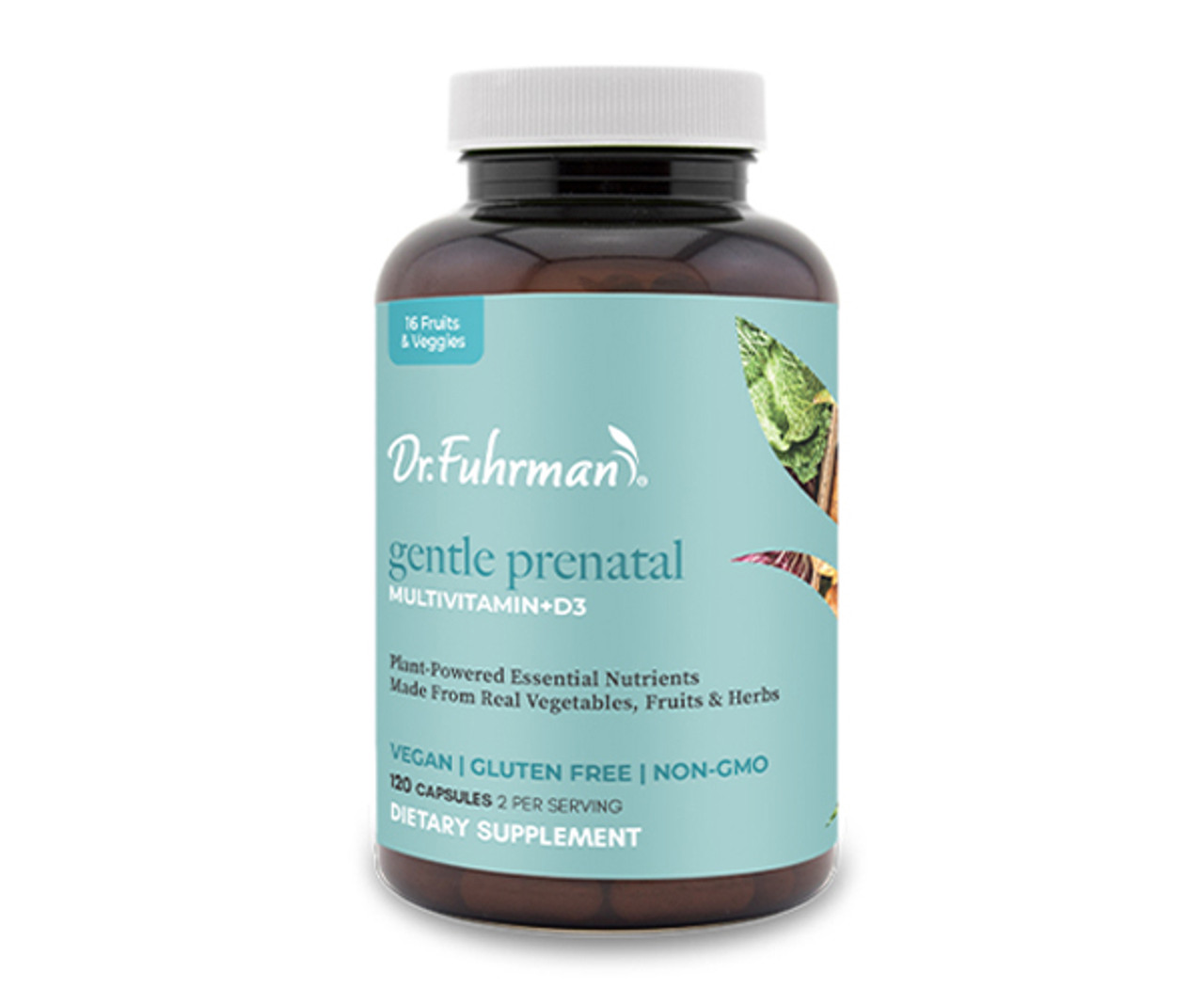
Dr. Fuhrman’s Gentle Prenatal
Now with Vitamin D3
Multivitamin and Mineral Supplement with Iron
Features:
- 25 mg of Ferronyl® iron designed to be gentle on the digestive system
- 1500 IU of Vitamin D3 compared to 400 IU in other prenatal formulas
- Premium quality ingredients
- Chelated minerals for maximum absorption
- Void of potentially harmful and toxic ingredients

- Consistently updated formula reflects most current research
- Manufactured by a GMP certified and FDA regulated facility
- Made with green, whole food extracts providing phytochemical and carotenoid concentrates
Benefits:
- Easily combined with food
- Gentle on the digestive tract
- Non-stimulating
- Complements a healthy diet
|
Avoid taking prenatal supplements containing these ingredients: vitamin A, high dose (200 IUs or greater) isolated Vitamin E, folic acid, beta carotene, and copper
Ideally, pregnant women should get the vast majority of their micronutrients from foods. Supplements are useful in conjunction with a healthy diet for ensuring adequate vitamin and mineral intakes, but it is crucial to avoid supplementing with excessively high levels of certain nutrients, which could lead to toxicity or other harmful effects. Dr. Fuhrman has thoroughly reviewed the medical literature to verify that the contents of his original Gentle Care Formula are appropriate to protect against vitamin and mineral deficiencies without being potentially toxic.
Gentle Prenatal contains the same carefully designed combination of vitamins and minerals
present in Gentle Care Formula, but has been uniquely tailored to the needs of pregnant women.
Contains 25 mg ferronyl iron
Women's iron needs approximately double during pregnancy because of increased blood volume and the iron needs of the developing fetus.1 For this reason, it is appropriate for most pregnant women to supplement with iron. The mother's iron stores are also important to assure iron adequacy in their babies, which is important for brain development and maximizing intelligence in children. Gentle Prenatal uses ferronyl iron, a premium source of supplemental iron. It is the most bioavailable form and is gentle on the digestive system.2,3,4 The daily dose of 25 mg of iron is split between two capsules to avoid the nausea and constipation commonly associated with iron supplements.
Contains 1500 IU Vitamin D3
Gentle Prenatal contains more vitamin D than most other prenatal multivitamins, which only contain 400 IU. Including 1500 IU vitamin D in Gentle Prenatal helps pregnant women to minimize the number of supplements they take each day. Vitamin D is an important supplement for pregnant women - during the third trimester, calcium demands increase and vitamin D is essential for calcium absorption and subsequently fetal bone growth. The amount of vitamin D currently contained in most prenatal vitamins (400 IU) is inadequate - vitamin D deficiency is common, affecting up to 50% of pregnant women and breastfed infants. Vitamin D insufficiency in pregnant and nursing women puts them at risk of preeclampsia and their children at risk of impaired growth during infancy and increased incidence of autoimmune diseases during childhood.5
Does not include folic acid, a potentially dangerous supplement that is typically recommended to pregnant women despite the dangers!
Dr. Fuhrman's Gentle Prenatal stands out from other prenatal vitamins.
- Gentle Prenatal includes 1500 IU of Vitamin D compared to 400 IU in other prenatal formulas
- Gentle Prenatal does not include the potentially toxic supplements Vitamin A, Vitamin E, beta-carotene, and copper.6
- Most importantly, Gentle Prenatal does not include folic acid, a potentially dangerous supplement that is typically recommended to every pregnant woman despite these dangers.
Dr. Fuhrman's Gentle Prenatal does not contain folic acid
Folate is a member of the family of B vitamins that is involved in regulating DNA synthesis and gene expression. Because of these crucial functions, folate plays important roles in fetal development - folate is essential during pregnancy, especially early on in pregnancy, for the prevention of neural tube defects. Folate is abundant in green vegetables like spinach, collards, bok choy, artichokes, and broccoli. More than adequate folate levels can be easily and safely achieved by including these foods in a healthy diet.
The Standard American Diet (SAD) is so nutritionally inadequate that the U.S. government and most physicians encourage women to take folic acid supplements, assuming women do not eat green vegetables and are folate deficient. However, taking synthetic folic acid is not the same as getting natural folate from vegetables and can result in excessive folic acid levels in the circulation.
Prenatal folic acid supplementation has been linked to breast cancer later in life, but food folate intake is protective.
- A study compared breast cancer mortality rates between women who took folic acid during their pregnancy and those that did not. Thirty years later those women who were given a hefty dose of folic acid during pregnancy were twice as likely to die from breast cancer.
- A 10-year study on women taking multivitamins concluded that those who took multivitamins containing folic acid increased their breast cancer risk by 20-30%.8
- A study investigating both food folate and synthetic folic acid found that only supplemental folic acid increased breast cancer risk. In other studies, women with low levels of food folate intake were more likely to be diagnosed with breast cancer.10,11
- The results some studies on the subject have been inconclusive, but often these did not differentiate between supplemental folic acid and food folate.11
- Folic acid supplementation has also been linked to prostate cancer and colorectal cancer.12
Folic acid supplementation during pregnancy can have damaging effects on childhood health
- Folic acid supplementation by pregnant women was shown to increase the risk of childhood asthma by 26%.13
- Folic acid supplementation during pregnancy is associated with increased incidence of respiratory tract infections in infants.14
- A study of pregnant women in Sweden found an increased incidence of cardiac birth defects in women who reported using folic acid supplements early in pregnancy.15
Diet during pregnancy is an important factor in childhood health
- The children of women who consumed more folate from food (more green vegetables) during pregnancy were less likely to develop ADHD.16
- Several studies have made connections between vegetable intake during pregnancy and lower risks of childhood cancers.17
Dr. Fuhrman urges pregnant women to eat a high nutrient diet including plenty of green vegetables, which will provide folate packaged with countless other nutrients and phytochemicals that will contribute to the health of both the mother and child.
Rich sources of food folate
The U.S. RDA for folate for healthy adults is 400 mcg/day, and 600 mcg/day for pregnant women.18
Asparagus, 2 cups cooked |
486 mcg |
|
Spinach, 3 cups raw |
175 mcg |
| Mustard greens, 2 cups cooked |
402 mcg |
Avocado, 1 |
121 mcg |
Lentils, 1 cup cooked |
356 mcg |
Pomegranate, 1 |
107 mcg |
Edamame, 1 cup cooked and shelled |
358 mcg |
Artichoke, 1 |
107 mcg |
Collards, 2 cups cooked |
354 mcg |
Summer squash, 3 cups |
100 mcg |
Broccoli, 2 cups cooked |
337 mcg |
Papaya, 1 cup |
53 mcg |
| Black beans, 1 cup cooked |
302 mcg |
Orange, 1 |
39 mcg |
Chickpeas, 1 cup cooked |
282 mcg |
Hazelnuts, 1/4 cup |
38 mcg |
| Adzuki beans, 1 cup cooked |
278 mcg |
Blackberries, 1 cup |
36 mcg |
Cauliflower, 1 small head |
225 mcg |
Walnuts, 1/4 cup |
29 mcg |
Romaine lettuce, 3 cups raw |
192 mcg |
Sunflower seeds, 1/4 cup |
26 mcg |
Brussels sprouts, 2 cups cooked |
187 mcg |
|
|
Clearly, we do not need synthetic folic acid supplements to meet our daily folate requirements.
Who should take Dr. Fuhrman's Prenatal?
Pregnant women, women who are breastfeeding, and women who plan to become pregnant should take (2) Gentle Prenatal capsules each day. This will provide 25 mg of iron to meet increased iron needs during pregnancy, and will help to ensure that women enter pregnancy in an iron adequate state. Early on in pregnancy, the growing fetus requires a small amount of additional iron, and more iron is required later in pregnancy with the increase in maternal blood volume.19 Women with a known iron deficiency should also take (2) Gentle Prenatal capsules daily.
Dr. Fuhrman's special recommendations for pregnant women:
- Gentle Prenatal
- Osteo-Sun
- DHA+EPA Purity
- A nutrient dense diet, rich in green vegetables (and folate)
See Dr. Fuhrman's Vitamin Advisor for more recommendations.
Suggested Use:
Two capsules daily (best when taken with meals) |