Dr. Fuhrman, How to live, for life
1-800-474-WELL (9355)
1-908-237-2195
Home About Lose Weight Reverse Disease Success Stories Events FAQ Library Shop Member Center Children Vitamin Advisor Blog
 

NEW Product!
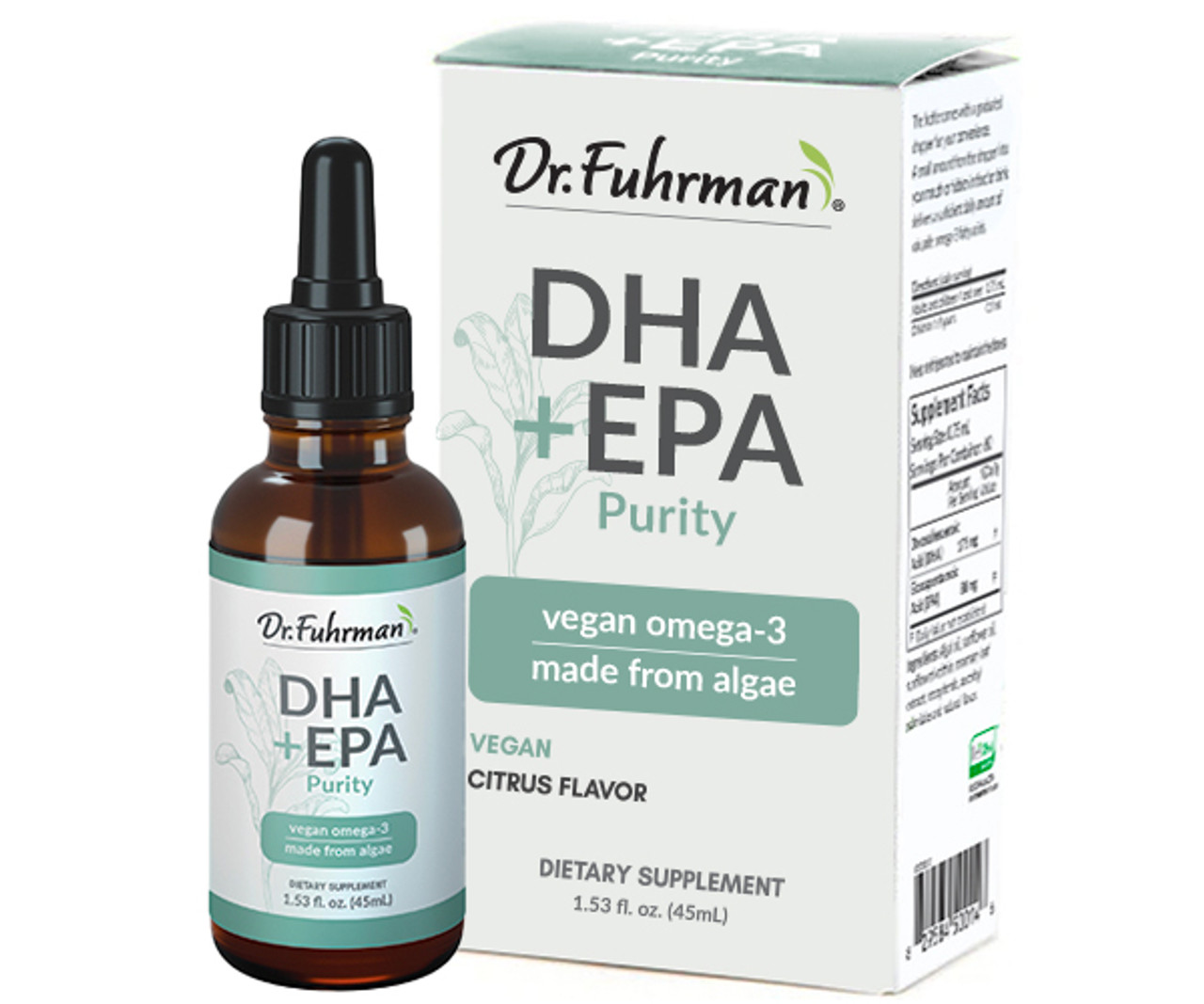
Dr. Fuhrman’s DHA+EPA Purity

100% Vegan DHA (long chain Omega–3)

Long-chain omega-3 fatty acids from fish are known to have a variety of health benefits, but eating fish is not the healthiest method for getting these valuable fats.

There are three major omega-3 fatty acids that we get from our diets. Alpha-linolenic acid (ALA) is a short-chain omega-3 found in flaxseeds, hemp seeds, walnuts, and other plant foods. ALA is an essential fatty acid – this means that the human body cannot synthesize it. When we take in ALA from plant foods, the body can elongate it into long-chain omega-3s: docosahexaenoic acid (DHA) and eicosapentaenoic acid (EPA), most commonly obtained by eating fish, whose tissues accumulate these fatty acids from algae or algae-consuming marine life. EPA and DHA are important for human health, especially our brain. Insufficiency of these valuable fats can cause a multitude of health issues.

Health benefits associated with DHA and/or EPA adequacy/supplementation


40 Day Supply
(30 ml.)
$37.99
Member Price: $34.19
Recurring Order Available

Case of 12
$387.50

bundle

  • Important for proper fetal and childhood brain and vision development
  • Reduced risk of ADHD and other childhood cognitive disorders
  • Improved memory; reduced risk of Alzheimer’s Disease and dementia
  • Improved lipid profile
  • Reduced risk of cardiovascular disease
  • Reduced risk of depression
  • Proper regulation of inflammation
  • Reduced risk of Parkinson’s disease

For vegetarians and vegans, are omega-3 supplements necessary? Or are walnuts and flaxseed enough?
EPA and DHA are considered “conditionally essential” fatty acids; even though the body is capable of making them from ALA (the “parent” omega-3 fatty acid), they may be essential under some conditions because of inefficient conversion from ALA or insufficient ALA intake.1 Conversion of ALA to EPA and DHA varies based on dietary omega-6 to omega-3 ratio, other dietary fats, alcohol consumption, gender, age and individual genetic differences.2,3 On average, less than 4% of ALA is converted to DHA in men and approximately 9% in women; less than 8% of ALA is converted to EPA in men and up to 21% may be converted in women. Much of the ALA we take in from our diet is burned for energy, not converted to EPA and DHA.4 Because only ALA, not pre-formed DHA and EPA, is present in plant foods, vegans commonly have lower circulating levels of DHA than non-vegans.3,5,6 Unless eating lots of fatty fish, the typical modern diet is low in pre-formed EPA and DHA for omnivores, vegetarians, and vegans alike. Most people eat a diet rich in omega-6 fats, but deficient in omega-3s. Many vegetarians who consume sufficient flax, hemp, chia, walnuts, and greens as a source of ALA may manufacture sufficient long-chain omega-3s on their own. However, even with an ideal diet, conversion efficiency may not be sufficient for many people to achieve optimal long-chain omega-3 status, especially for DHA.

One small study has suggested that vegans may have greater conversion efficiency than fish-eaters.7 However, the number of vegan participants was too small to come to any conclusions. Vegan diets generally have a high ratio of omega-6 to omega-3 fatty acids, which inhibits conversion; a ratio of 2:1 to 4:1 is thought to result in adequate conversion, but vegetarian and vegan diets typically range between 10:1 and 20:1 (typical omnivorous diets are approximately 10:1), indicating that conversion is likely not optimal. The low long-chain omega-3 blood levels found in vegans also indicate that conversion from ALA may not produce sufficient EPA and DHA to achieve their health benefits.3 It is often the case that consuming more ALA does not guarantee sufficient DHA. For example, ALA supplementation of 2 grams/day (Adequate Intake of ALA recommended by the Institute of Medicine is 1.1 grams/day for women and 1.6 grams/day for men) was shown to produce only a very slight increase in long-chain omega-3 blood levels.8 I have found similarly when testing fatty acid levels in my patients that deficiencies of these fatty acids frequently exist, even in those who eat excellent diets with plenty of ALA-rich foods.

As of yet, there is no data in the scientific literature investigating whether EPA and DHA supplementation specifically in vegetarians or vegans reduces disease risk similarly to the general population.9 However, at least two studies in vegetarians has shown that DHA supplementation improves serum lipids; triglycerides were reduced in both studies, and one study also saw a decrease in the total:HDL cholesterol ratio and the LDL:HDL ratio. These results indicate that adding pre-formed EPA and DHA to a high-nutrient vegetarian or vegan diet would likely enhance the cardiovascular and other health benefits of the diet itself.10,11

With so many fish oils and vegetarian long-chain omega-3 supplements on the market, what makes Dr. Fuhrman’s DHA+EPA Purity unique?

  • 100% vegan
  • A few drops (0.75 ml) delivers over 250 mg long-chain omega-3 fatty acids (172 mg DHA, 82 mg EPA), a dose established to reduce the risk of cardiovascular disease12
  • Derived from lab-grown algae – no environmental contaminants
  • Awarded pharmaceutical grade certification (GMP)
  • Third party certified for purity and freshness
  • Purified liquid concentrate instead of capsules – capsules can hide the taste of rotten oil.
  • Pleasant citrus flavor, easily hidden in food and drink
  • Carefully stored and packaged in dark glass to preserve freshness.

New formula now contains EPA in addition to DHA
DHA is certainly the most important omega-3 fatty acid to supplement, because conversion of ALA to DHA is much lower than that of EPA. However, EPA has vital functions as well, and adding a small amount in a supplement helps to assure adequacy. EPA is an important precursor to eicosanoids, molecules that regulate the inflammatory response. EPA’s anti-inflammatory effects have allowed it to be used therapeutically (at higher doses) for inflammatory diseases and depression.13,14

Up until recently, vegan sources of EPA were unavailable, but since that has now changed, we can now make available a comprehensive algae-derived vegan long-chain omega-3 supplement, similar in composition to the fish oils that have been studied extensively.

Why take algae-derived supplements instead of fish or fish oil?
Fish is an unfavorable source of DHA and EPA because most fatty fish contain harmful pollutants, such as dioxin and mercury. People also report difficulty digesting fish oils because of the fishy taste and foul odor. The bad taste, indigestion, and burping from these oils do not feel healthy. Purified fish oils are an option, but our oceans are in crisis. The claims about fish benefiting heart health have increased the demand for both fish and fish oils, and this demand cannot be met by the world's current supply. In 2003, it was estimated that the world’s large predatory fish populations had declined 90% since the 1950s. 15 Farmed fish are also problematic – they are fed a diet of smaller, wild fish, driving wild fish stocks down and adding chemicals and pollutants to local waters.16 Algae-based DHA+EPA Purity is a more sustainable option, and it is free of the environmental pollutants that accumulate in the fatty tissues of fish.

Since EPA and DHA have so many crucial functions and health benefits, it is imperative to maintain adequate levels of these fatty acids.


More about the health benefits of long-chain omega-3 fatty acids

Algae derived DHA was found in recent studies to increase the HDL/LDL ratio and decrease the total cholesterol/HDL ratio as well as lower triglycerides.5 DHA also increases the elasticity of the blood vessels and reduces total vascular resistance resulting in a lower pulse pressure that has significant effects at lessening the occurrence of cardiovascular events, such as heart attacks and strokes.6 It also has an anti-arrhythmic effect reducing the overall rate of fatal heart attacks.7

DHA is important for pregnant and nursing women
DHA is one of the crucial building blocks of human brain tissue. Omega-3 fatty acids are structural components of cell membranes - DHA specifically accumulates in the cell membranes of the retina, brain, and nervous system. Adequate levels of DHA throughout life are important for vision and learning.1 The developing baby’s only source of DHA for beginning to build brain tissue is its mother’s dietary intake. Early in life, DHA is supplied via the placenta and from breast milk. During the last trimester of pregnancy and first two years of childhood, DHA is especially important for vision and brain development.17 Maintaining adequate DHA levels during pregnancy is believed to benefit the child’s cognitive development.18 Studies have shown improved intelligence scores of breast fed children whose mothers took DHA supplements during pregnancy and nursing.19 Similarly, the results of three randomized controlled trials in 2009 showed that babies given supplemental DHA in formula scored higher on a problem solving test at 9 months of age than babies given control formula.20 DHA supplementation also reduces the risk of preterm birth – a factor known to be associated with compromised cognitive development in the infant and maternal depression.21

Since pregnant women are urged to limit fish consumption because of the potential harm from mercury contamination to the brain of the developing baby, supplemental DHA is a safe alternative.22

Omega-3 fatty acids for prevention/treatment of ADHD
Insufficient DHA has been linked to a number of childhood cognitive and developmental disorders such as ADHD, dyslexia, and autism spectrum disorders.23,24 Supplementation with omega-3s, especially in combination with certain omega-6 fatty acids, has been found to improve behavior and ADHD symptoms.17,25-27

DHA for prevention of Alzheimer’s disease and cognitive decline
Low DHA intake and low levels of DHA in the blood are associated with age-related cognitive decline and Alzheimer’s disease. DHA or DHA+EPA supplements have been found to improve learning and memory in mild cognitive impairment, but not in already established Alzheimer’s disease. The important message from these studies is that omega-3 supplements are most effective when taken preventively.28-30 Maintaining adequate DHA stores throughout life, as well as eating a diet rich in natural plant foods, is necessary for preventing the late life occurrence of these age-related cognitive deficits.

Omega-3 fatty acids for prevention of cardiovascular disease
Fish consumption has been linked to decreased risk of death from coronary heart disease and sudden cardiac death. This decreased risk has been attributed to beneficial effects of omega-3 fatty acids, and similar results have been seen with algae-based omega-3 supplements.31

  • Decreased electrical excitability of heart muscle cells, which prevents arrhythmias that can lead to sudden cardiac death
  • A few drops (0.75 ml) delivers over 250 mg long-chain omega-3 fatty acids (172 mg DHA, 82 mg EPA), a dose established to reduce the risk of cardiovascular disease12
  • Modulation of inflammatory processes leading to decreased clotting, reducing the risk of heart attack
  • Slowing the growth of atherosclerotic plaque by reducing inflammation
  • Enhancing endothelial cell function, mildly reducing blood pressure
  • Improves serum lipids10,11
  • Increasing arterial elasticity, which lowers pulse pressure32,33

A recent review of the literature has determined that 250 mg of long-chain omega-3 fatty acids per day is an effective dose for reducing cardiovascular risk. Intake of at least 250 mg/day was associated with a 35.1% reduced risk of sudden cardiac death and a 16.6% reduced risk of total fatal coronary events compared to intake of less than 250 mg/day.12 Accordingly, DHA+EPA Purity contains 254 mg long-chain omega-3 fatty acids per serving.

Omega-3 fatty acids for preventing and treating depression, especially postpartum depression
Low omega-3 status may increase vulnerability to depression extraction of mothers’ DHA stores by their babies is thought to be responsible for many cases of postpartum depression. Long-chain omega-3 fatty acids can affect the metabolism of depression-related neurotransmitters (serotonin, norepinephrine, and dopamine), and their anti-inflammatory effects are thought to ameliorate depression symptoms as well.17,34,35 High dose omega-3 supplements are also used to treat depression, and their therapeutic effects are due mostly to EPA rather than DHA, according to a recent meta-analysis.36

Omega-3 fatty acids for preventing Parkinson’s disease
Recent scientific findings show diets rich in omega-3 fatty acids, in particular DHA (docosahexaenoic acid), have a protective effect against neurodegenerative diseases like Parkinson’s disease. Studies in animals clearly show that supplementation of DHA can alter brain DHA concentrations and have protective effects on brain cells that can reduce the risk of Parkinson's.37

Dr. Fuhrman explains: My experience over the last twenty years of counseling hundreds of vegan patients struck me with a peculiar oddity: I saw a number of male elderly vegans that developed Parkinson’s disease (males convert short chain omega-3 from greens, walnuts and flax less efficiently to DHA than do females). The striking thing was that when I drew their blood levels for DHA, they were not just deficient, but their DHA was almost non-existent. I observed a significant, severe deficiency of DHA in elderly vegan males. Most often these were men who ate a very healthy vegan diet with sufficient nuts and seeds and no junk food. This led me to think that DHA deficiency may be a contributory factor for Parkinson’s.

Animal studies support this idea. One recent study examined mice which were exposed to two diets; one group was fed a diet with DHA and other omega-3 fatty acids; while the other group was given ordinary food, lacking DHA. After a period of time they were given a dose of a chemical that causes the same damage to the brain as Parkinson's disease. The mice on the DHA diet seemed to be immune to the effects of the chemical, whereas the mice that ate ordinary food developed symptoms of the disease. DHA concentrations increased in the brains of the mice that had been given omega-3 supplementation, but concentrations of other omega-3s (ALA and EPA) were similar in both groups of mice. This result suggested that the protective effect against Parkinson's indeed came from DHA.38

My experience confirms that a healthy diet (even with plenty of ALA-rich foods) simply may not be enough to sustain sufficient DHA levels to maintain brain health throughout life. This may be more important for males as they age. DHA deficiency carries dangerous risks and supplementation is the sensible choice.

Note: The EPA levels in DHA+EPA Purity may not be therapeutic for individuals with specific medical conditions such as depression or autoimmune disease. These individuals may require additional supplementation of EPA.

Note: Upon receipt of product, keep refrigerated to maintain freshness.

 
Supplement Facts
Serving Size: 0.75 mL
Servings Per Container:
 
  Amount Per Serving  %DV

Docosahexenoic Acid (DHA)

175mg **

Eicosapentaenoic Acid (EPA)

88 mg **

* Percent values are based on 2,000 calorie diet.
**Daily value not established.

Other ingredients: Natural flavor, mixed tocopherols, sunflower lecithin, and rosemary extract.
Directions:
  • Keep out of reach of children.
  • Protect from heat, light and moisture.
  • Shake prior to use.
  • Refrigerate upon receipt.
  • Store at 15-30C (59-86F).
  • Do not purchase if seal is broken.
These supplements have not been evaluated by the Food and Drug Administration.
Products listed are not intended to diagnose, treat, cure or prevent disease.

References

1. Higdon J: Essential Fatty Acids. In An Evidence-Based Approach to Dietary Phytochemicals. New York, NY: Thieme; 2006: 78-99
2. Harnack K, Andersen G, Somoza V: Quantitation of alpha-linolenic acid elongation to eicosapentaenoic and docosahexaenoic acid as affected by the ratio of n6/n3 fatty acids. Nutr Metab 2009;6:8.
3. Davis BC, Kris-Etherton PM: Achieving optimal essential fatty acid status in vegetarians: current knowledge and practical implications. Am J Clin Nutr 2003;78:640S-646S.
4. Arterburn LM, Hall EB, Oken H: Distribution, interconversion, and dose response of n-3 fatty acids in humans. Am J Clin Nutr 2006;83:1467S-1476S.
5. Sanders TA: DHA status of vegetarians. Prostaglandins Leukot Essent Fatty Acids 2009;81:137-141.
6. Kornsteiner M, Singer I, Elmadfa I: Very low n-3 long-chain polyunsaturated fatty acid status in Austrian vegetarians and vegans. Ann Nutr Metab 2008;52:37-47.
7. Welch AA, Shakya-Shrestha S, Lentjes MA, et al: Dietary intake and status of n-3 polyunsaturated fatty acids in a population of fish-eating and non-fish-eating meat-eaters, vegetarians, and vegans and the precursor-product ratio of alpha-linolenic acid to long-chain n-3 polyunsaturated fatty acids: results from the EPIC-Norfolk cohort. Am J Clin Nutr 2010;92:1040-1051.
8. Fokkema MR, Brouwer DA, Hasperhoven MB, et al: Short-term supplementation of low-dose gamma-linolenic acid (GLA), alpha-linolenic acid (ALA), or GLA plus ALA does not augment LCP omega 3 status of Dutch vegans to an appreciable extent. Prostaglandins Leukot Essent Fatty Acids 2000;63:287-292.
9. Mangat I: Do vegetarians have to eat fish for optimal cardiovascular protection? Am J Clin Nutr 2009;89:1597S-1601S.
10. Conquer JA, Holub BJ: Supplementation with an algae source of docosahexaenoic acid increases (n-3) fatty acid status and alters selected risk factors for heart disease in vegetarian subjects. J Nutr 1996;126:3032-3039.
11. Geppert J, Kraft V, Demmelmair H, et al: Microalgal docosahexaenoic acid decreases plasma triacylglycerol in normolipidaemic vegetarians: a randomised trial. Br J Nutr 2006;95:779-786.
12. Musa-Veloso K, Binns MA, Kocenas A, et al: Impact of low v. moderate intakes of long-chain n-3 fatty acids on risk of coronary heart disease. Br J Nutr 2011.
13. Anderson BM, Ma DWL: Are all n-3 polyunsaturated fatty acids created equal? Lipids in Health and Disease 2009;8:33.
14. Chapkin RS, Kim W, Lupton JR, et al: Dietary docosahexaenoic and eicosapentaenoic acid: emerging mediators of inflammation. Prostaglandins Leukot Essent Fatty Acids 2009;81:187-191.
15. Myers RA, Worm B: Rapid worldwide depletion of predatory fish communities. Nature 2003;423:280-283.
16. Jenkins DJA, Sievenpiper JL, Pauly D, et al: Are dietary recommendations for the use of fish oils sustainable? Can Med Assoc J 2009;180:633-637.
17. Kidd PM: Omega-3 DHA and EPA for cognition, behavior, and mood: clinical findings and structural-functional synergies with cell membrane phospholipids. Altern Med Rev 2007;12:207-227.
18. Ryan AS, Astwood JD, Gautier S, et al: Effects of long-chain polyunsaturated fatty acid supplementation on neurodevelopment in childhood: a review of human studies. Prostaglandins Leukot Essent Fatty Acids 2010;82:305-314.
19. Helland IB, Smith L, Saarem K, et al: Maternal supplementation with very-long-chain n-3 fatty acids during pregnancy and lactation augments children's IQ at 4 years of age. Pediatrics 2003;111:e39-44.
20. Drover J, Hoffman DR, Castaneda YS, et al: Three randomized controlled trials of early long-chain polyunsaturated Fatty Acid supplementation on means-end problem solving in 9-month-olds. Child Dev 2009;80:1376-1384.
21. Oken E, Belfort MB: Fish, fish oil, and pregnancy. JAMA 2010;304:1717-1718.
22. Koletzko B, Cetin I, Brenna JT: Dietary fat intakes for pregnant and lactating women. Br J Nutr 2007;98:873-877.
23. Schuchardt JP, Huss M, Stauss-Grabo M, et al: Significance of long-chain polyunsaturated fatty acids (PUFAs) for the development and behaviour of children. Eur J Pediatr 2010;169:149-164.
24. Stevens LJ, Zentall SS, Deck JL, et al: Essential fatty acid metabolism in boys with attention-deficit hyperactivity disorder. Am J Clin Nutr 1995;62:761-768.
25. Sinn N, Bryan J, Wilson C: Cognitive effects of polyunsaturated fatty acids in children with attention deficit hyperactivity disorder symptoms: a randomised controlled trial. Prostaglandins Leukot Essent Fatty Acids 2008;78:311-326.
26. Sinn N, Bryan J: Effect of supplementation with polyunsaturated fatty acids and micronutrients on learning and behavior problems associated with child ADHD. J Dev Behav Pediatr 2007;28:82-91.
27. Transler C, Eilander A, Mitchell S, et al: The impact of polyunsaturated fatty acids in reducing child attention deficit and hyperactivity disorders. J Atten Disord 2010;14:232-246.
28. Yurko-Mauro K: Cognitive and cardiovascular benefits of docosahexaenoic acid in aging and cognitive decline. Curr Alzheimer Res 2010;7:190-196.
29. Yurko-Mauro K, McCarthy D, Rom D, et al: Beneficial effects of docosahexaenoic acid on cognition in age-related cognitive decline. Alzheimers Dement 2010.
30. Quinn JF, Raman R, Thomas RG, et al: Docosahexaenoic acid supplementation and cognitive decline in Alzheimer disease: a randomized trial. JAMA 2010;304:1903-1911.
31. Doughman SD, Krupanidhi S, Sanjeevi CB: Omega-3 fatty acids for nutrition and medicine: considering microalgae oil as a vegetarian source of EPA and DHA. Curr Diabetes Rev 2007;3:198-203.
32. Kris-Etherton PM, Harris WS, Appel LJ: Fish consumption, fish oil, omega-3 fatty acids, and cardiovascular disease. Arterioscler Thromb Vasc Biol 2003;23:e20-30.
33. Nestel P, Shige H, Pomeroy S, et al: The n-3 fatty acids eicosapentaenoic acid and docosahexaenoic acid increase systemic arterial compliance in humans. Am J Clin Nutr 2002;76:326-330.
34. Ramakrishnan U, Imhoff-Kunsch B, DiGirolamo AM: Role of docosahexaenoic acid in maternal and child mental health. Am J Clin Nutr 2009;89:958S-962S.
35. Stahl LA, Begg DP, Weisinger RS, et al: The role of omega-3 fatty acids in mood disorders. Curr Opin Investig Drugs 2008;9:57-64.
36. Martins JG: EPA but not DHA appears to be responsible for the efficacy of omega-3 long chain polyunsaturated fatty acid supplementation in depression: evidence from a meta-analysis of randomized controlled trials. J Am Coll Nutr 2009;28:525-542.
37. Calon F, Cole G: Neuroprotective action of omega-3 polyunsaturated fatty acids against neurodegenerative diseases: evidence from animal studies. Prostaglandins Leukot Essent Fatty Acids 2007;77:287-293.
38. Bousquet M, Saint-Pierre M, Julien C, et al: Beneficial effects of dietary omega-3 polyunsaturated fatty acid on toxin-induced neuronal degeneration in an animal model of Parkinson's disease. FASEB J 2008;22:1213-1225.
Shop
Audio/Video
Books
Food
Gift Baskets
Gift Certificates
Health/Fitness
Home Health Screenings
Kitchen
Membership
Newsletters/Position Papers
Posters/Magnets/Cards
Skin Care
Supplements
T-shirts
Customer Service Policies
Vitamin Advisor
My eLibrary

Free magnet click for details
Shipped Orders Over $100
receive a
FREE Magnet
Details
Gold Starter Pack
Gold Starter Pack

What you get:
Price: $39.99
Buy Now!

*Automatically billed $9.95/month after initial 3 month period

Silver Starter Pack
Silver Starter Pack

What you get:
Price: $29.95
Buy Now!

*Automatically billed $3.95/month after initial 3 month period

Member Center - Join Today!
Silver Membership*
Monthly plan: $3.95/month
Initial registration: $11.85
(includes first 3 months)

Annual plan: $39.95/year

Gold Membership*
Monthly plan: $9.95/month
Initial registration: $29.85
(includes first 3 months)

Annual plan: $99.50/year

Platinum Membership*
Monthly plan: $49.95/month
Initial registration: $149.85
(includes first 3 months)

Annual plan: $499.95/year

Get All of the benefits of Platinum Membership
For Life!


Lifetime Membership
$3,000 (one time charge)

* Memberships are automatically renewed for your convenience.
All membership fees are non-refundable.

Eat To Live
2011 edition (abridged)
Now available as a VookTM
iPhone with Eat To Live Vook
A VookTM is a new form of ebook combined with engaging video.
Read it, watch it.
Learn More


NRP Banner